
Meet Nenia:
Honestly, I didn't think very much about accessibility for much of my life.
Although I've been dealing with the symptoms of EDS, Endometriosis, and mild POTS for decades, I never would have labeled myself as disabled. I was adapting, overcoming, and, dare I say it, even thriving. In 2020, I was a police officer, doing CrossFit six days a week for fun, and hiking 4,000-foot mountains in my spare time. Pushing my body to its limits was just a normal Tuesday for me.
Then I got COVID. Suddenly, those chronic illness symptoms that I usually pushed through became debilitating, impossible to ignore, and all-consuming. Additionally, a whole new collection of symptoms became a part of my everyday life and, just like that, disability took over. I could barely get out of bed, never mind push myself to participate in the activities I had previously loved.
I felt completely betrayed by my body.
A body I had once been able to trust to keep me alive in some pretty intense situations was now fighting just to breathe normally. I had to give up my career as a police officer, along with many of my other favorite activities.
I felt trapped inside my body.
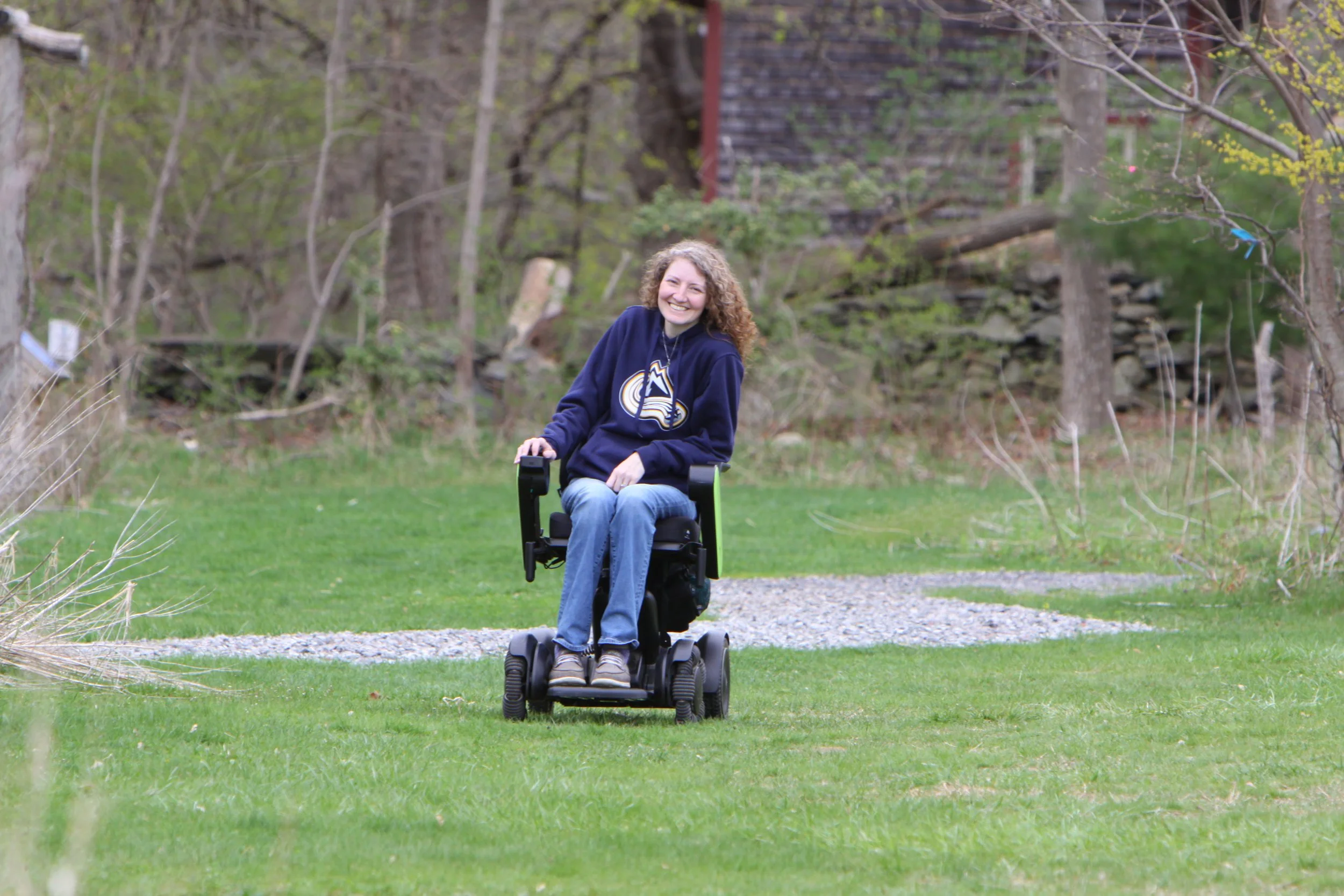
I started using a wheelchair in 2021. As I started navigating the world in my chair, I quickly learned two things:
1. My wheelchair was the device that gave me the freedom to continue exploring the world.
2. The world was not designed to allow me to explore it from my chair.
It was frustrating to have a tool that gave me my life back, only to have it thwarted by a single step that could — and should—have been a ramp. Where I hadn't previously noticed accessibility barriers, I now saw them everywhere.
The worst offender was the space that once brought me the most joy - the outdoors.
What I once took for granted as a place I could go to simply get lost and clear my head was now a tactical challenge, requiring a level of reconnaissance and planning that the 'old me' never even considered.
Parks, trails, and beaches were simply not designed with wheels in mind - at least, not the kind of wheels that I was now sporting. Barriers existed everywhere - gravel walkways, boulders positioned close together to prevent cars from driving down trails that my chair couldn’t fit through, a steep step onto a bridge on an otherwise flat trail. All things people could easily overlook when they didn’t need to think about their accessibility.
As Ms. Wheelchair New Hampshire 2026, I’ve made it my mission to advocate for better outdoor infrastructure. I’m pushing for a world where 'all-access' actually means for all. My wheels might be small, but the tracks I’m leaving for the next generation of disabled explorers are big.
Follow Ms. Wheelchair NH!
Follow Nenia’s adventures as Ms. Wheelchair New Hampshire 2026, and her journey to the National stage of Ms. Wheelchair America in Grand Rapids, Michigan!